
Bingo Ticket: The 3x9 Grid and the Strip of Six
By Bingo PH Editorial Team
- 21+ onlyPAGCOR keeps anyone under 21 away from the gaming it licenses, bingo included, so each page is pitched at grown-ups. Not 21 yet? Come back on the day you are.
- Calls traced to a sourceA rule, a count or a prize figure shows up only when PAGCOR or a studio prints it, or when the sum is laid out in front of you. What nobody publishes gets the words "not published".
- No operator namedNo hall, app or casino is named, scored or ranked on these pages. They explain bingo and nothing else: no stakes taken, no balances held, no promise of a win.
Bingo ticket layout in 90-ball bingo
A ticket is a grid of 9 columns and 3 rows, 27 squares. Each row has 5 numbers and 4 blanks, so a ticket carries 15 numbers.
| Column | Numbers it can hold |
|---|---|
| 1 | 1 to 9 |
| 2 | 10 to 19 |
| 3 to 8 | the next six tens, from 20 to 79 |
| 9 | 80 to 90 |
The ranges tell you where to look. Hearing 63 sends your eyes to the seventh column, and hearing 8 sends them to the first.
The strip of six
Tickets come joined in strips of six. Across a strip, every number from 1 to 90 appears exactly once. The count checks out: six tickets with 15 numbers each make 90 numbers, one for each ball.
That design has a useful consequence for the player holding a whole strip. Every ball called will be on one of your six tickets, so you always have something to mark. It also means a full strip costs six tickets, so the cost of covering every number is set by the price of six.
A strip holds 6 tickets of 3 rows each, so one strip shows all 90 numbers once.
Prizes on a ticket
The game pays for one line, then two lines, then a full house. A line is the five numbers of one row. A full house is all 15 numbers of one ticket, and the expected last call for it is about 85.3 of 90, as an Example for a single ticket in a fair draw.
If a strip is split, PAGCOR’s framework principle that split cards are not entitled to win suggests you should keep tickets together and in the form they were sold. Check the program for what the hall allows.
For how to play the whole game, read 90 ball bingo, and for the card most Philippine halls use, see the 75-ball card.
Reading a strip quickly
When you hold a strip, check it once before the game: count 6 tickets, then confirm each has 3 rows with 5 numbers. A ticket with a different layout is not part of a standard 90-ball strip.
Then pick a routine. Many players mark all six tickets together, working column by column. With 9 columns and only a few numbers in each, the work is lighter than it looks, because a called number appears on only one ticket in the strip.
Keep tickets joined if the hall sold them joined. A torn strip can become a question at the claim, and an unclear claim slows the game for everyone.
Call it in three moves
-
Hear the call
Start with the plain statement: the pattern name, the rule or the figure the source actually prints. Skip the rumours and the stories that start with someone I know.
-
Find it on your card
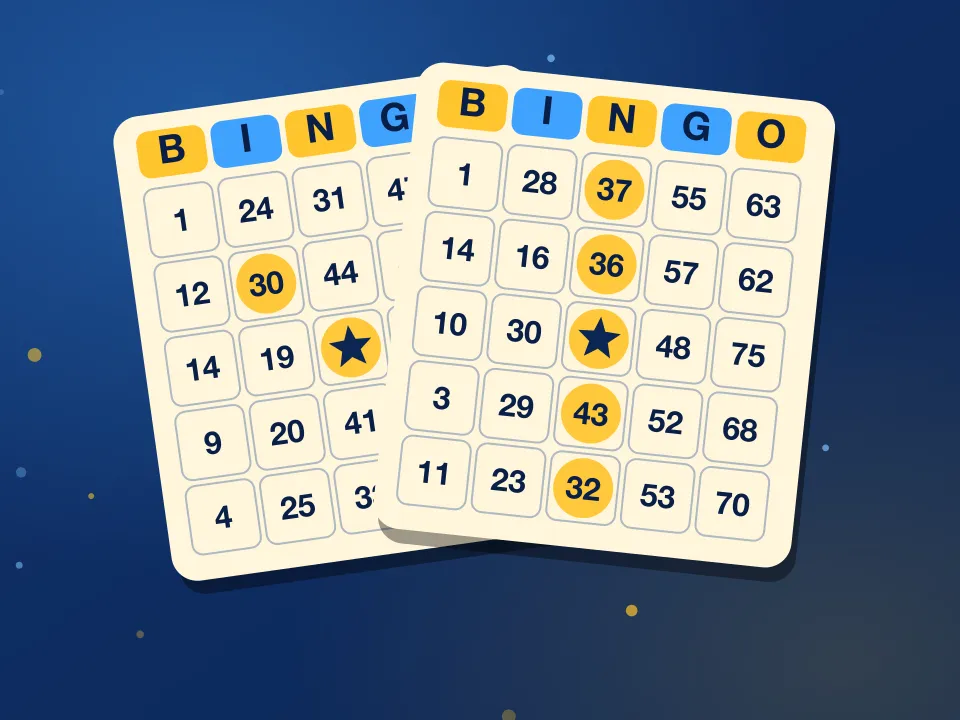
Lay that statement over a 5x5 card. Count the squares it needs, check whether the free space counts, and you know how far you are from calling it.
-
Take the tip
Decide your card budget before the first number is called, and stop when it is spent. A bingo night is paid entertainment, never income.

