
How to Make Bingo Cards by Hand: A Valid 5x5 Card Step by Step
By Bingo PH Editorial Team
- 21+ onlyPAGCOR keeps anyone under 21 away from the gaming it licenses, bingo included, so each page is pitched at grown-ups. Not 21 yet? Come back on the day you are.
- Calls traced to a sourceA rule, a count or a prize figure shows up only when PAGCOR or a studio prints it, or when the sum is laid out in front of you. What nobody publishes gets the words "not published".
- No operator namedNo hall, app or casino is named, scored or ranked on these pages. They explain bingo and nothing else: no stakes taken, no balances held, no promise of a win.
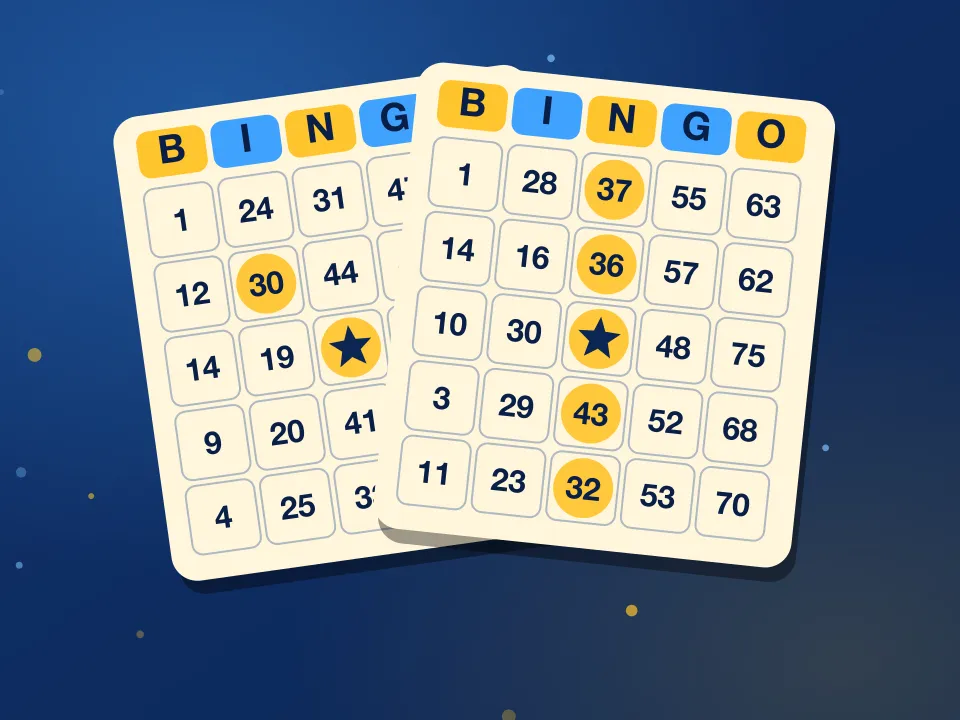
How to make bingo cards by hand comes down to one rule: each number sits in its own column range. Follow the steps below to draw a valid 5x5 card, check it and see how many different cards the rules allow.
How to make bingo cards: the ranges you need
Every valid card draws from the same five ranges.
| Column | Choose from | How many to pick |
|---|---|---|
| B | 1 to 15 | 5 |
| I | 16 to 30 | 5 |
| N | 31 to 45 | 4, plus FREE in the middle |
| G | 46 to 60 | 5 |
| O | 61 to 75 | 5 |
Number the squares from the top, so that the third row of the N column holds the word FREE.
Making a card, step by step
- Rule a 5x5 grid and write the five letters over the columns.
- Write FREE in the middle square.
- For each column, pick numbers from its range in any order, and never repeat a number in that column.
- Read the card aloud column by column to catch a slip.
- Make the next card the same way, with a different order or different numbers.
Take your time with the check, because a card with a number outside its range is not valid for a standard game.
How many cards you can make
Each ordered column pick is a different card. The first four columns have 360,360 ordered picks, and the N column has 32,760, so the total is 360,360 to the fourth power times 32,760, about 5.52 x 10^26, as an Example of counting.
For a class of 30 players, that is not a worry. A simple rule is to shuffle the numbers within each column and compare cards at the end of the table to catch duplicates. This page gives no printable file, so draw each card yourself.
For the full numbers, see card number rules, and for the tickets used in other versions, the 90-ball ticket page.
Checking a hand-made card
Run three quick checks before using a card. Read each column against its range, confirm no number repeats within the card, and confirm the free space sits in the centre. A card that fails any check should be redone.
If you make cards for a group, keep a master sheet, and compare cards in pairs when you are done. Two identical cards are rare, but a mistake in copying can create them. With 24 numbers per card, a quick scan of the first column is usually enough to spot a duplicate.
Keep the cards clean and the numbers large. A card that is hard to read slows the whole round.
For a class of 30 players, 30 cards means 30 checks of 5 columns each.
A card-making checklist
- Five letters across the top, in order.
- FREE in the centre square.
- Five numbers in B, I, G and O, four in N.
- Every number inside its own range.
- No repeats within the card.
Call it in three moves
-
Draw the grid
Rule a 5x5 square, write B, I, N, G and O across the top and mark the middle square FREE.
-
Fill each column
Choose five numbers for B, I, G and O and four for N, each from its own range, with none repeated.
-
Check and test
Read every column against its range and confirm no card in the same game matches yours.

