
Bingo Card Numbers: The Column Ranges and the 5.52 x 10^26 Cards
By Bingo PH Editorial Team
- 21+ onlyPAGCOR keeps anyone under 21 away from the gaming it licenses, bingo included, so each page is pitched at grown-ups. Not 21 yet? Come back on the day you are.
- Calls traced to a sourceA rule, a count or a prize figure shows up only when PAGCOR or a studio prints it, or when the sum is laid out in front of you. What nobody publishes gets the words "not published".
- No operator namedNo hall, app or casino is named, scored or ranked on these pages. They explain bingo and nothing else: no stakes taken, no balances held, no promise of a win.
Bingo card numbers by column
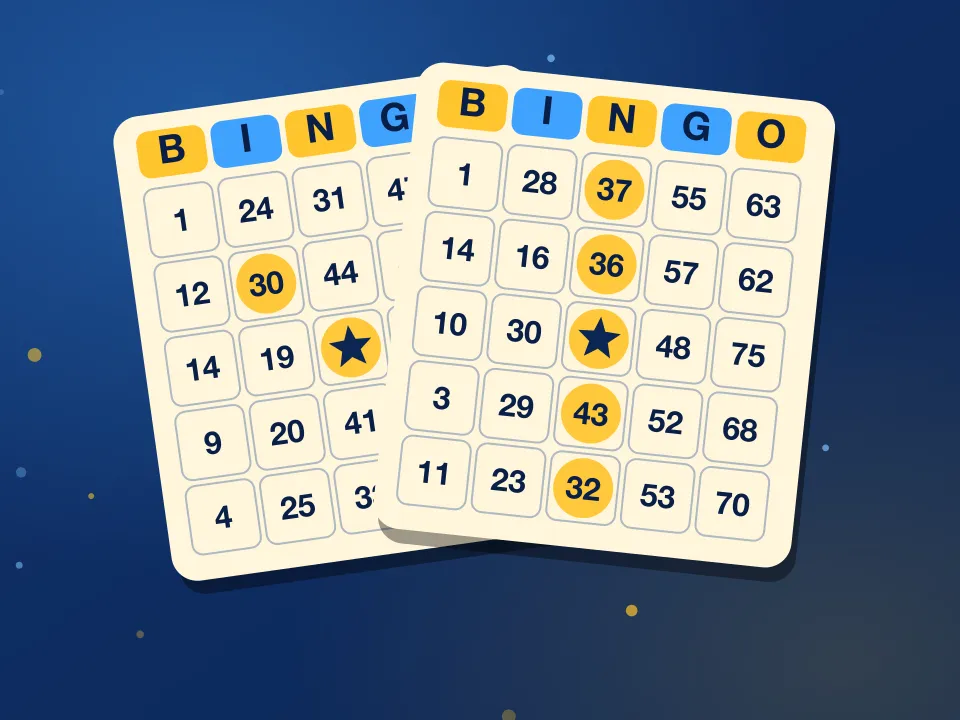
Each letter owns a block of 15 numbers. A column draws its 5 numbers, or 4 in the N column, only from its own block, and no number is repeated within a card.
| Column | Range | Numbers on the card | Ordered picks |
|---|---|---|---|
| B | 1 to 15 | 5 | 360,360 |
| I | 16 to 30 | 5 | 360,360 |
| N | 31 to 45 | 4 | 32,760 |
| G | 46 to 60 | 5 | 360,360 |
| O | 61 to 75 | 5 | 360,360 |
The ordered picks come from multiplying down the column: 15 times 14 times 13 times 12 times 11 is 360,360, and the N column has one square fewer, so 15 times 14 times 13 times 12 is 32,760.
How many different cards are there
Multiply the five columns together. Four columns of 360,360 and one of 32,760 gives 360,360 to the fourth power times 32,760, which is 552,446,474,061,128,648,601,600,000, or about 5.52 x 10^26. This is an Example of counting with the stated rule: every ordered column pick counts as a different card.
The number is far beyond any print run. A hall might use a few thousand cards in a session, so two players holding the same card is rare, and a card is effectively unique to the room.
Reading the numbers on a card at the counter
Use the ranges as a validity check. A number outside its column’s range means the card is not valid under the usual layout. This check also catches a damaged or hand-made card before you pay for it.
A second check is the free space: the middle of N should be marked FREE, and a card with a number there is a different format. Compare the card’s format with the program for the game you are about to play.
PAGCOR’s rules say split cards cut from a multi-face sheet are not entitled to win, which is another reason to check what you are handed. For the 90-ball version of the same idea, see the page on 90-ball tickets, and for making your own, read how to make bingo cards.
Common questions about the numbers on a card
Many players wonder whether a card with low numbers or high numbers plays differently. It does not. Each square is called with the same chance as any other, so the sum of the numbers on your card has no bearing on anything.
Another habit worth dropping is hunting for cards with a certain number. Cards are sold in the hall’s own sheets and packages, and the program records the faces per sheet and the sheets per package. If you want a different card, ask for a different sheet, and do not pay extra for a number you like.
A quick test with 5x5 squares: 24 numbers plus 1 free space is 25 squares, and every card in a standard game follows that count.
Call it in three moves
-
Hear the call
Start with the plain statement: the pattern name, the rule or the figure the source actually prints. Skip the rumours and the stories that start with someone I know.
-
Find it on your card
Lay that statement over a 5x5 card. Count the squares it needs, check whether the free space counts, and you know how far you are from calling it.
-
Take the tip
Decide your card budget before the first number is called, and stop when it is spent. A bingo night is paid entertainment, never income.

