
Postage Stamp Bingo: Cover a Small Cluster in One Corner
By Bingo PH Editorial Team
- 21+ onlyPAGCOR keeps anyone under 21 away from the gaming it licenses, bingo included, so each page is pitched at grown-ups. Not 21 yet? Come back on the day you are.
- Calls traced to a sourceA rule, a count or a prize figure shows up only when PAGCOR or a studio prints it, or when the sum is laid out in front of you. What nobody publishes gets the words "not published".
- No operator namedNo hall, app or casino is named, scored or ranked on these pages. They explain bingo and nothing else: no stakes taken, no balances held, no promise of a win.
Postage stamp bingo on the card
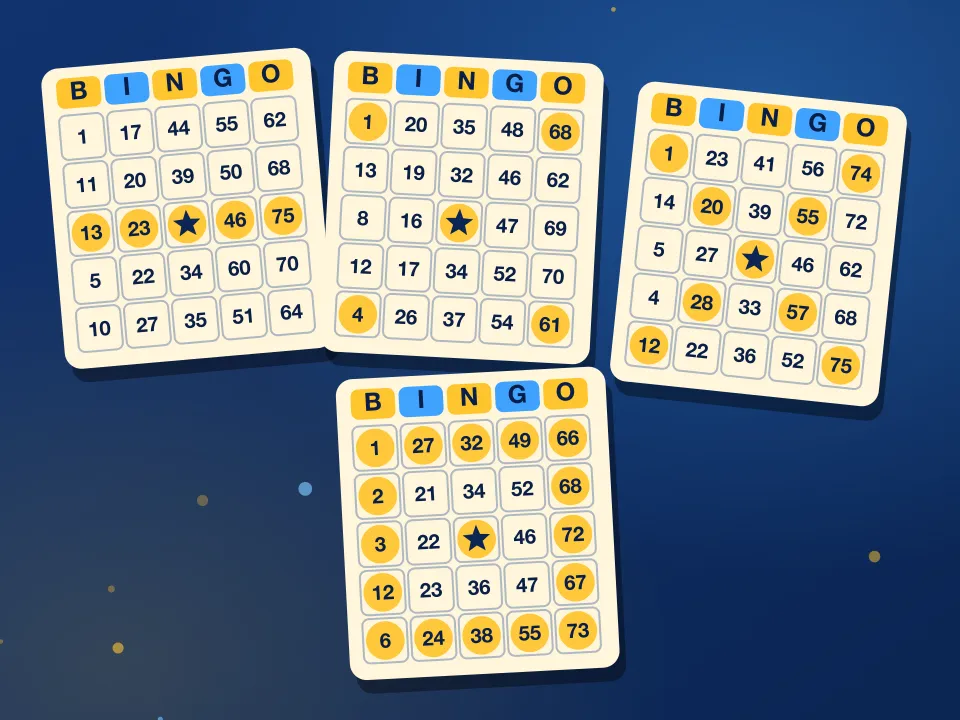
As usually drawn, the stamp is a 2x2 block in one corner. The top-left version covers B and I numbers in the first two rows.
| B | I | N | G | O |
|---|---|---|---|---|
| X | X | |||
| X | X | |||
| FREE | ||||
How PAGCOR lists postage stamp
PAGCOR’s framework places “postage stamp” among fixed patterns, with the note cluster or double cluster, and lists postage stamp two ways among moving patterns. Fixed means the shape sits in one place for the game. Moving means it may shift, and the program says how.
| Listing | Type | Meaning |
|---|---|---|
| Postage stamp (cluster or double cluster) | Fixed | One cluster, or two |
| Postage stamp, 2 ways | Moving | Two allowed placements |
Postage stamp odds for one card
A 2x2 stamp needs 4 specific numbers, so the arithmetic matches four corners. The chance that all 4 are out within 30 calls is about 2.3%, and about 19% by 50 calls, for one card in a fair draw, as an Example. The expected last call is 4 times 76 divided by 5, about 60.8.
Where the stamp sits makes no difference to the odds, because every square is equally likely to be called. A two-way stamp gives you two chances, which helps, but the program sets the prize.
See also the diagonal pattern and block of 9 bingo for larger shapes.
Marking a stamp without confusion
A stamp is easy to misread because it hides in a corner. Place a finger on the four squares and say their column letters aloud: B and I in the first two rows, for the top-left stamp. Then you only react to calls from those two letters.
If the program says the stamp can move, ask which placements count. Some games allow the stamp in any corner, and some name one. Four placements, one per corner, give four chances on the same card, while a named corner gives one.
Keep the card flat and the marks clear, because staff read a stamp by looking at the squares, and a smudged mark invites a second check.
Stamp games are quick and cheap on the numbers, so they suit a short warm-up round. Treat any prize on the program as the whole story, because the shape alone tells you nothing about what a win pays.
A 2x2 stamp covers 2 rows and 2 columns, so you listen for 2 letters only.
Call it in three moves
-
Hear the call
Start with the plain statement: the pattern name, the rule or the figure the source actually prints. Skip the rumours and the stories that start with someone I know.
-
Find it on your card
Lay that statement over a 5x5 card. Count the squares it needs, check whether the free space counts, and you know how far you are from calling it.
-
Take the tip
Decide your card budget before the first number is called, and stop when it is spent. A bingo night is paid entertainment, never income.

