
Bingo vs Lotto: A Card and a Pattern Against a Pick and a Draw
By Bingo PH Editorial Team
- 21+ onlyPAGCOR keeps anyone under 21 away from the gaming it licenses, bingo included, so each page is pitched at grown-ups. Not 21 yet? Come back on the day you are.
- Calls traced to a sourceA rule, a count or a prize figure shows up only when PAGCOR or a studio prints it, or when the sum is laid out in front of you. What nobody publishes gets the words "not published".
- No operator namedNo hall, app or casino is named, scored or ranked on these pages. They explain bingo and nothing else: no stakes taken, no balances held, no promise of a win.
Bingo vs lotto: how the games work
| Feature | Bingo | Lotto |
|---|---|---|
| Your numbers | Printed on a card | Picked by you or at random |
| The draw | One ball at a time | One set of numbers |
| How you win | Complete a pattern first | Match the drawn numbers |
| Competition | Other players race you | Prize tiers by matches |
A bingo game plays out over many calls, and you are racing other cards. A lotto ticket is settled by one draw, and your result depends only on your own matches.
Lotto odds, worked as an Example
For a rule of pick 6 numbers from 42, the number of possible tickets is C(42, 6), which equals 5,245,786. So one ticket has a 1 in 5,245,786 chance of matching all six. For a larger game, pick 6 from 58, C(58, 6) is 40,475,358, so the chance is 1 in 40,475,358.
| Rule (Example) | Possible tickets |
|---|---|
| Pick 6 of 42 | 5,245,786 |
| Pick 6 of 58 | 40,475,358 |
These figures are worked from stated rules, not from any real game, and no real lotto’s rules are quoted here.
What to take from the comparison
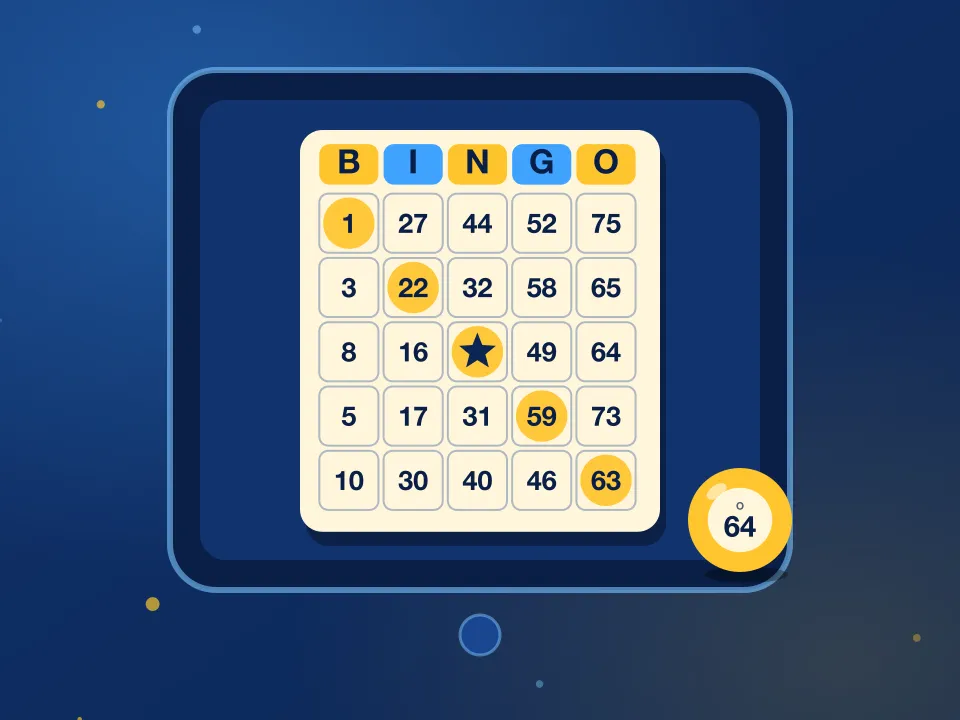
Compare a bingo pattern: for one card, four corners has about a 40% chance of being complete by call 60, an Example. That tells you the card will often finish, though others may finish first. Lotto’s top prize is the opposite: nearly always missed.
Neither game has a system, and both ask for a limit. If you play either, you must be 21 or older where PAGCOR’s rules apply. For how a card compares with a pick, read keno, and for the prize rules in bingo, the payout rules page.
When each game suits a player
Bingo suits a player who likes a session with many short results and a social pace. Lotto suits one who prefers a single result at a set time. Neither is a way to make money.
If you choose bingo, look at the pattern, the prize and the price. If you choose lotto, look at the rule and work out the ticket count as above. PCSO, the body that runs lotto, publishes its own game rules, so check those for any real game.
A 90-minute bingo night may hold 10 games, while a lotto ticket is one draw.
Call it in three moves
-
Hear the call
Start with the plain statement: the pattern name, the rule or the figure the source actually prints. Skip the rumours and the stories that start with someone I know.
-
Find it on your card
Lay that statement over a 5x5 card. Count the squares it needs, check whether the free space counts, and you know how far you are from calling it.
-
Take the tip
Decide your card budget before the first number is called, and stop when it is spent. A bingo night is paid entertainment, never income.