
Diagonal Bingo: Four Numbers Plus the Free Space
By Bingo PH Editorial Team
- 21+ onlyPAGCOR keeps anyone under 21 away from the gaming it licenses, bingo included, so each page is pitched at grown-ups. Not 21 yet? Come back on the day you are.
- Calls traced to a sourceA rule, a count or a prize figure shows up only when PAGCOR or a studio prints it, or when the sum is laid out in front of you. What nobody publishes gets the words "not published".
- No operator namedNo hall, app or casino is named, scored or ranked on these pages. They explain bingo and nothing else: no stakes taken, no balances held, no promise of a win.
Diagonal bingo on the card
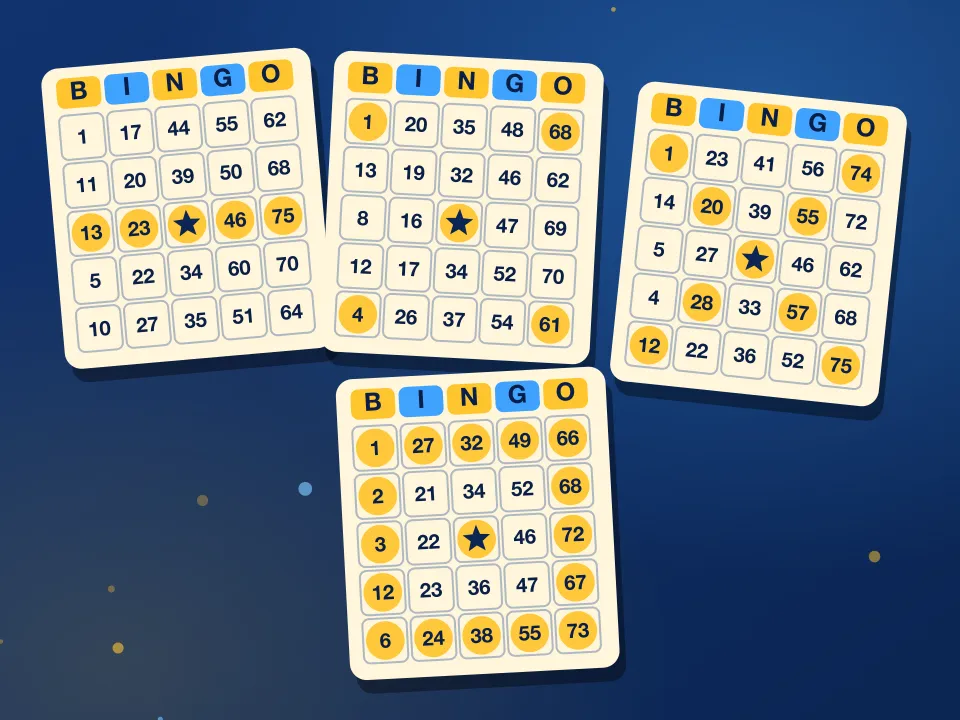
The two diagonals cross at the centre, which is the free square. That gives a one-square head start to each.
| B | I | N | G | O |
|---|---|---|---|---|
| X | ||||
| X | ||||
| FREE | ||||
| X | ||||
| X |
Diagonal bingo odds
The diagonal needs 4 numbers, so it shares the arithmetic of four corners. The chance that all 4 are out within n calls is C(75 minus 4, n minus 4) divided by C(75, n).
| Calls | Chance for one card |
|---|---|
| 30 | about 2.3% |
| 50 | about 19% |
| 60 | about 40% |
The expected last call is about 60.8. These are an Example for one card and a fair draw. The double diagonal, with 8 numbers, has an expected last call of about 67.6.
Single or double: how the program words it
PAGCOR’s framework describes a fixed straight line, vertical, horizontal or diagonal, single or double. In a diagonal game, single means one diagonal and double means both. Check the program for which applies, because the prize may differ.
Because every diagonal uses the free space, a diagonal game is one of the faster games on the card. Compare it with an ordinary line in line patterns, and see the letter patterns for the X shape.
Which numbers a diagonal uses
The top-left to bottom-right diagonal takes one number from each column: a B, an I, the free space, a G and an O. The other diagonal takes the same letters in the opposite rows.
That means a diagonal needs one number from four different ranges: 1 to 15, 16 to 30, 46 to 60 and 61 to 75, and none from the N column. Knowing this lets you listen selectively: an N call cannot help a diagonal.
If you hold two cards, the diagonals on each are separate, so mark them separately and keep the cards in view.
A diagonal game is quick, so be ready for a claim within a few minutes of the first ball.
Diagonal prizes depend on the program, and the shape is short, so expect the prize to be modest. If a hall offers a double diagonal, remember that it needs 8 numbers, twice the work for one more line, and weigh the prize against that extra wait before you buy a card for it.
A diagonal covers 5 rows in 5 different columns, so it uses 1 square from each column.
Call it in three moves
-
Hear the call
Start with the plain statement: the pattern name, the rule or the figure the source actually prints. Skip the rumours and the stories that start with someone I know.
-
Find it on your card
Lay that statement over a 5x5 card. Count the squares it needs, check whether the free space counts, and you know how far you are from calling it.
-
Take the tip
Decide your card budget before the first number is called, and stop when it is spent. A bingo night is paid entertainment, never income.

